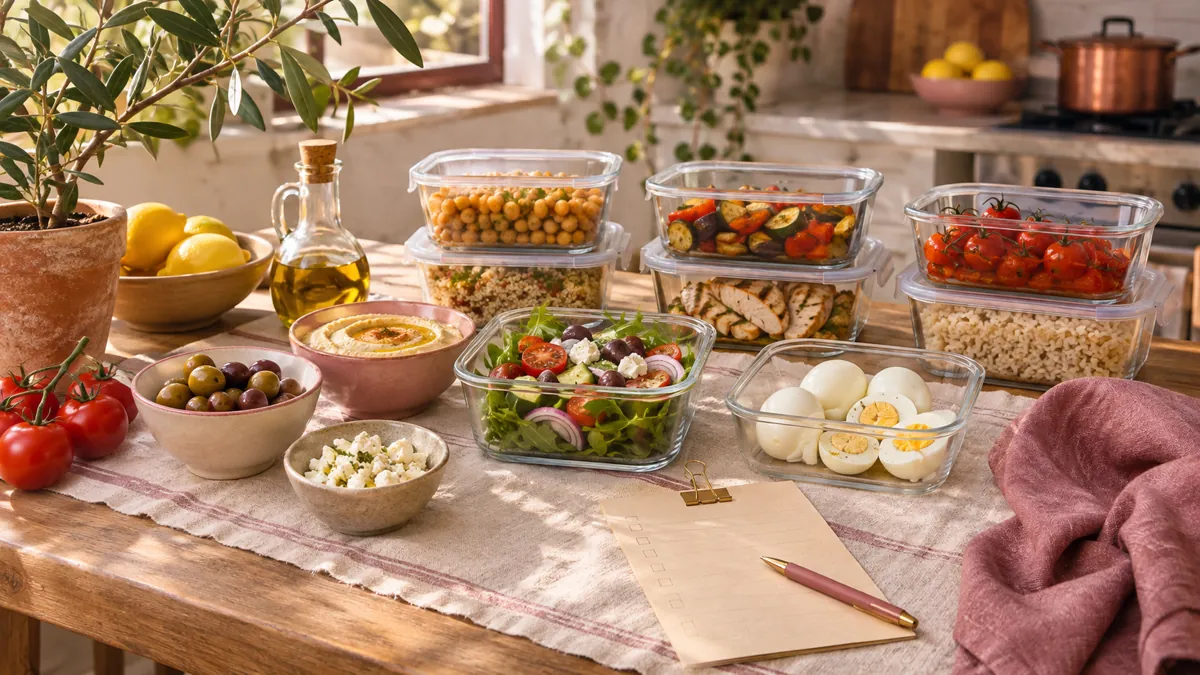
A meal plan is useful when it reduces decisions, not when it turns every dinner into a test of discipline. If you are balancing work, family, changing energy, and health goals, a repeatable set of meals can make the week calmer. The plan below uses ordinary foods, a short shopping list, and leftovers. It is a flexible example rather than a medical diet or a promise of weight loss.
Many women notice body composition changes during midlife, but no special menu can “balance hormones” or target belly fat. Food quality, adequate nutrition, movement, sleep, and personal health all matter. Read our guide to midlife weight changes for the bigger picture before putting all the pressure on one week of meals.
What makes this plan flexible
Each day includes a protein-rich food, vegetables or fruit, and a satisfying carbohydrate. Fats such as olive oil, nuts, avocado, or dressing add flavor. Portions depend on your hunger, body size, activity, health, and goals. If you need a precise plan for diabetes, kidney disease, pregnancy, allergies, or another condition, a registered dietitian should tailor it. Do not treat the examples as prescriptions.
You can swap meals across days, repeat favorites, or use leftovers. A week with three reliable breakfasts and four easy dinners is often more practical than 21 unique recipes. If you dislike an ingredient, replace it with a food in the same broad role: tofu for chicken, beans for fish, rice for potatoes, or frozen vegetables for fresh. The plan should fit your kitchen and budget.
There is no required eating schedule. Some people like a planned snack; others do well without one. If an afternoon snack helps you arrive at dinner pleasantly hungry rather than ravenous, include it. Skipping meals to “keep insulin down” is not necessary for everyone and may backfire if it leaves you underfed. Focus on whether your routine supports energy and satisfaction.
The shopping list
For protein foods, choose eggs, plain Greek yogurt or a suitable soy yogurt, chicken or tofu, canned tuna or salmon, beans, lentils, and a little cheese if you enjoy it. You do not need every item; select enough for the meals you plan to make. For grains and starches, consider oats, whole-grain bread or wraps, rice, potatoes, and pasta. Keep two or three options you already know your household eats.
For produce, buy a mix of fresh and frozen: berries or other fruit, salad greens, carrots, tomatoes, peppers, broccoli, and a frozen vegetable blend. Frozen produce can be cheaper, lasts longer, and reduces the pressure to use everything immediately. Add olive oil, nuts or seeds, lemon, spices, and a sauce you like. Flavor makes simple meals repeatable.
Before you shop, look at the calendar. How many nights will you cook? Which days need a five-minute meal? Buy for the real week, not an ideal one. A pantry meal is a success when it keeps you fed on a busy day. If budget is tight, beans, eggs, oats, potatoes, and frozen vegetables are useful foundations.
Days one and two: start with easy repeats
Day one breakfast: Greek yogurt with oats, berries, and walnuts. Use soy yogurt or tofu on toast if dairy does not suit you. Lunch: a wrap with chicken or tofu, salad greens, tomato, and a dressing you like. Dinner: sheet-pan chicken or tofu with potatoes and broccoli. Make extra for tomorrow. If you want a snack, try fruit with yogurt or a handful of nuts.
Day two breakfast: eggs or scrambled tofu with toast and fruit. Lunch: leftovers from the sheet pan over salad or rice. Dinner: lentil and vegetable pasta with a side salad. Use jarred tomato sauce and frozen vegetables to save time. A simple meal does not become less nutritious because the sauce came from a jar; choose one that tastes good and fits your needs.
The first two days establish a pattern: cook once, use it twice. That reduces the number of decisions and dishes. If a meal leaves you hungry soon after, increase its substance. Add beans to the wrap, a larger portion of pasta, or a side of fruit. A plan that constantly leaves you hungry is unlikely to last.
Days three and four: use the pantry
Day three breakfast: overnight oats made with milk or a fortified soy drink, topped with yogurt and fruit. Lunch: lentil pasta leftovers. Dinner: bean and vegetable tacos with avocado, salsa, and a little cheese or a dairy-free alternative. Keep tortillas and canned beans for an especially fast meal. The family can choose their own toppings from the same base.
Day four breakfast: repeat the yogurt bowl or eggs. There is no prize for inventing a new breakfast. Lunch: taco leftovers in a rice bowl with extra greens. Dinner: baked fish or tofu with rice and a frozen vegetable blend. If you do not eat fish, choose another protein source. Add lemon, herbs, or a sauce that makes the plate enjoyable.
These days demonstrate that a “meal plan” does not require expensive specialty foods. Canned beans and frozen vegetables are useful precisely because they make dinner possible when energy is low. A ready-made component is a tool, not a failure. If cooking is a barrier, reduce steps before you reduce variety.
Days five through seven: stay flexible
Day five breakfast: toast with eggs, cottage cheese, or tofu, plus fruit. Lunch: fish or tofu leftovers with rice and vegetables. Dinner: a big vegetable omelet or tofu scramble with potatoes. This is a good “clean out the fridge” meal. Add a salad or fruit if you want it, and keep the portions satisfying.
Day six breakfast: oats with yogurt or soy milk and nuts. Lunch: a bean salad with chopped vegetables, olive oil, and whole-grain bread. Dinner: a family favorite that already fits your life, such as homemade burgers with salad and potatoes, chicken and rice, or a vegetarian chili. The point is not to force every Saturday into an unfamiliar template. A flexible plan should survive ordinary social life.
Day seven breakfast: choose any breakfast from the week. Lunch: leftovers or a quick sandwich. Dinner: prepare a pot of chili with beans and vegetables, adding meat or tofu if you like. Save portions for the freezer. Before bed, check what food remains and decide on two dinners for next week. Planning gets easier when it begins with what you already own.
The sequence is a menu of possibilities, not a rulebook. If you are still hungry after a meal, eat more. If you are less hungry on a particular day, adjust naturally. If your body needs a different plan, seek individual advice. The goal is a week you can learn from, then repeat with changes.
How to prep without losing your Sunday
Spend 20 to 30 minutes on a few components, not seven completed dinners. Wash or chop produce, cook a pot of rice, prepare a protein food, and mix a simple dressing. Store food safely and follow local food-safety guidance for cooling and reheating. If you dislike batch cooking, buy prewashed greens and frozen vegetables instead. Convenience can be worth the price when it prevents unused food.
Keep a “rescue meal” list on your phone: eggs and toast, beans and rice, tuna with potatoes, or tofu with frozen stir-fry vegetables. These are complete enough for a busy night and faster than starting a recipe from scratch. The most valuable meal plan is the one that still works on Thursday when you are tired.
If eating out is part of your week, plan for it. Choose a meal you enjoy, and return to your ordinary pattern afterward. One restaurant dinner does not erase the rest of the week. Treating food as a pass-or-fail test can make healthy eating more stressful and less sustainable.
Protein, movement, and sleep work together
Protein-rich foods can support muscle maintenance, particularly when you also do strength work. See our practical protein guide for examples and cautions about one-size-fits-all targets. Add short strength sessions and walking according to your current capacity. No single meal compensates for a lack of movement, and exercise does not require a perfect menu.
Sleep can change appetite and the energy available for cooking. When a poor night makes elaborate meals unrealistic, use your rescue list rather than starting over on Monday. For night sweats, insomnia, or persistent fatigue, our sleep guide explains when to seek help and how to make evenings easier.
Frequently asked questions
Do I need to eat only “clean” food?
No. A healthy pattern can include convenience foods, desserts, and meals out. Aim for enough nourishment and variety across the week. Strict labels often add stress without making a plan more useful.
Should I remove carbohydrates after 35?
No. Whole grains, fruit, beans, and potatoes can be part of satisfying meals. Your needs and portions vary. If you have diabetes, seek individualized guidance rather than following a blanket rule.
Will this seven-day plan cause weight loss?
There is no guaranteed outcome. Weight change depends on many factors, including overall intake, activity, health, and time. This plan is a practical framework for meals, not a therapeutic prescription or a promise of a smaller waist.
Want the decisions made for longer?
The M-Body Method extends the planning idea across 28 days with meal ideas, grocery lists, recipes, and short home workouts in one PDF. You can use it as a convenient structure and adapt it to your needs. See exactly what the M-Body Method includes before deciding whether it is right for you.