If you have been told that the only way to manage midlife weight is to do more cardio, strength training may feel unfamiliar. It deserves a place in the week because it improves strength and helps preserve muscle, whether or not weight changes. You can begin at home with a chair, a wall, and a few minutes. You do not need a gym membership or an exhausting workout to start.
This article offers a simple routine, ways to progress, and realistic safety notes. It is general education, so adapt it with a qualified professional if you have pain, a health condition, or uncertainty about exercise. For the food side of the plan, see our protein guide and weekly meal planner.
Why strength work matters in midlife
Muscle supports daily tasks: climbing stairs, lifting groceries, getting up from the floor, and staying steady as you age. Adults may lose strength when they are inactive, and body composition can change during the menopause transition. Resistance training gives muscles a reason to adapt. Studies in middle-aged and postmenopausal women find improvements in strength and body composition, although individual results vary. It is a health practice, not a tool that guarantees a smaller waist.
The CDC recommends muscle-strengthening activity for all major muscle groups on at least two days each week, plus at least 150 minutes of moderate aerobic movement. You can spread the aerobic minutes across the week. A short strength session is a useful entry point, but a 20-minute workout by itself is not the full activity guideline. Walking, cycling, dancing, and other activities you enjoy can fill the aerobic part.
Cardio and strength are partners. Walking helps your heart and mood; strength builds capacity for the things you do every day. If you have heard that cardio is harmful because it “raises cortisol,” set that claim aside. Normal responses to exercise are part of adaptation. The more useful question is whether your weekly activity fits your recovery, health, and life.
Start with a realistic schedule
Choose two nonconsecutive days for full-body strength work. Tuesday and Friday, for example, provide recovery between sessions. Begin with 15 to 20 minutes if that is what you can repeat. On other days, take walks or do another aerobic activity at a comfortable effort. If two sessions feel overwhelming, start with one and build toward two.
Before each session, move gently for three to five minutes. Walk around the room, roll your shoulders, and practice easy versions of the movements. You do not need a complicated warm-up. Afterward, take a moment to breathe and notice how you feel. A little muscle fatigue is normal; sharp pain, dizziness, or chest symptoms are reasons to stop and seek medical advice.
Keep a chair or counter nearby if balance is a concern. Wear shoes that feel stable, clear floor space, and begin with movements you can control. Form should allow steady breathing. Avoid holding your breath, especially if you have been told to monitor blood pressure. A physical therapist or qualified trainer can help adapt movements for arthritis, joint problems, or a previous injury.
Your first 20-minute full-body session
Do one or two rounds of the following movements. Aim for a manageable number of repetitions, such as six to ten, while keeping a few comfortable repetitions in reserve. Rest as needed between movements. The exact count is less important than controlled effort and the ability to return for the next session.
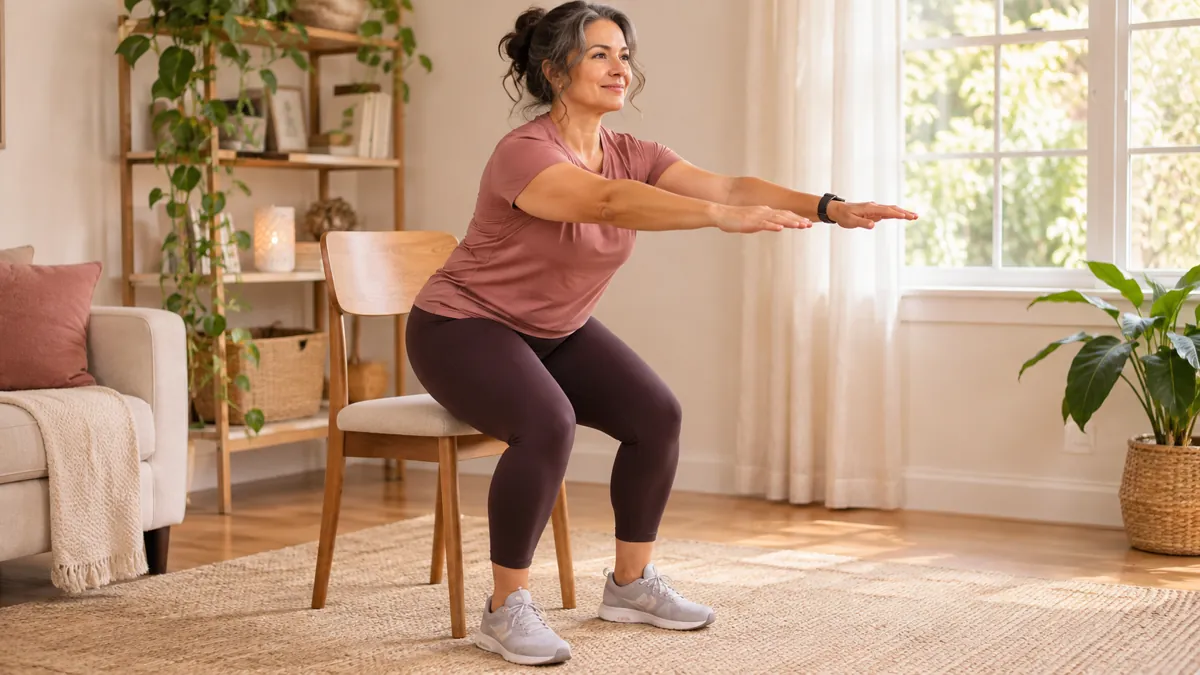
Chair sit-to-stand: Sit on a sturdy chair with feet planted. Lean slightly forward and stand, then lower with control. Use your hands for support at first. This works the legs and hips and mirrors a daily movement. If it becomes easy, slow the lowering phase or use a lower chair only if it remains safe.
Wall or counter push-up: Place your hands on a wall or solid counter, step back, and bend your elbows to bring your chest closer. Push away without locking your shoulders. A wall is easier; a counter is usually harder. Choose the angle that lets you move smoothly. This trains pushing strength in the chest, shoulders, and arms.
Hip hinge: Stand with feet comfortable apart and soften the knees. Move your hips backward while keeping your back in a comfortable, neutral position, then stand tall. Imagine closing a drawer with your hips. This introduces a pattern used for lifting. Add a light bag only when the bodyweight version feels clear and pain free.
Supported row: Use a resistance band anchored safely, or a light bag held in one hand while the other hand supports you on a sturdy surface. Pull toward your hip, then lower slowly. Do both sides. This trains the upper back. If the band anchor can slip, choose the bag version or ask a trainer to show a safe setup.
Calf raise and carry: Hold a chair and rise onto your toes, then lower slowly. For a carry, walk briefly with a light bag at your side, switch hands, and stay upright. These movements add lower-leg and grip work. If balance is difficult, skip the carry until you have support.
You do not have to perform all five movements on day one. Choose three, learn them, and add more later. A session you can finish comfortably is more valuable than an ambitious plan that makes you avoid the next one.
How to progress without burning out
After two or three weeks, ask whether the final repetitions feel easier. If they do, add a repetition or a second round, use a slightly more challenging angle, or hold a modest weight. Change one thing at a time. Progress can also mean smoother form or better balance. The point is gradual challenge, not constant soreness.
Leave recovery time between harder sessions for the same muscles. Mild soreness after a new routine can happen, but severe or prolonged pain is a sign to reduce the load and assess the movement. On a busy week, one short session is still worth doing. Do not attempt to “make up” for missed days with a punishing workout.
Tracking can be simple: write down the date, movements, and how many repetitions felt comfortable. A note such as “chair stand, eight reps, two rounds” tells you what to repeat or change next time. If you dislike tracking, set a recurring calendar reminder and focus on attendance. Consistency is the first milestone.
Where walking fits
Walking is a flexible way to build aerobic minutes. Start with a route or time that suits your current fitness, even if it is only ten minutes. Add time or pace gradually. A walk after a meal can be pleasant, but it is not a special fat-burning window. Any comfortable time of day counts. If walking is limited by pain or mobility, cycling, swimming, or other suitable movement may work better.
You can split activity into smaller blocks. Three ten-minute walks across a day add up to 30 minutes. The CDC notes that some activity is better than none and that the weekly target can be spread out. You do not need perfect adherence to benefit from being more active.
Pair movement with a routine you already have: a short walk after work, a strength session before your usual shower, or a weekend outing with a friend. Enjoyment and convenience are strong reasons a habit survives. Do not choose a form of exercise solely because an advertisement says it burns more fat.
Food, sleep, and recovery support the routine
Eat enough to support your activity. Include protein-rich foods across meals, along with carbohydrates, produce, and fats. You do not need a supplement immediately after exercise for a beginner routine. If you train after a long workday and feel weak, try a snack or move the session to another time. Our protein article offers food-first options.
Sleep matters because tiredness affects motivation and recovery. Midlife sleep can be disrupted by stress, night sweats, or other health issues. You may need to adjust training effort after a poor night, and persistent sleep problems deserve attention. Read our sleep and stress guide for practical steps.
Recovery also means respecting injury signals. If a movement consistently hurts a joint, choose a different version or ask for help. Exercise should expand what your body can do, not make you fearful of moving. A qualified professional can help you find the right starting point.
A simple first month
In week one, learn three movements and do one or two easy rounds twice. Add short walks on a few other days. In week two, repeat the same plan and note which movement feels steadier. In week three, add a round or a few repetitions to one movement if it feels manageable. In week four, keep what works and decide whether to increase walking or strength gradually.
This is an example, not a deadline. Some people progress faster; others need more time or an adapted plan. You have not failed if you repeat week one for a month. The real goal is a routine that supports life beyond 28 days.
For a broader explanation of midlife changes, read what contributes to weight gain after 35. Strength is only one piece, alongside food quality, activity, sleep, and health needs.
Frequently asked questions
Do I need heavy weights?
No. Bodyweight, bands, or light household items can help you learn. As you become stronger, gradually increasing resistance may be useful. The right level challenges you while allowing controlled movement.
Will strength training make me bulky?
Building large amounts of muscle takes sustained training and nutrition. A beginner routine is more likely to improve strength and function. Body changes vary, and you can adjust the routine to your goals.
Is 20 minutes enough?
Twenty minutes can be an effective starting session if you work major muscle groups and progress gradually. For overall activity, also aim toward aerobic movement and at least two strength days as your health allows.
A guided starting point
The M-Body Method includes short home workouts alongside meals and grocery lists. It is a planner to make starting easier, not a replacement for personalized medical or physical therapy advice. See the 28-day M-Body Method and choose the parts that fit your current level.