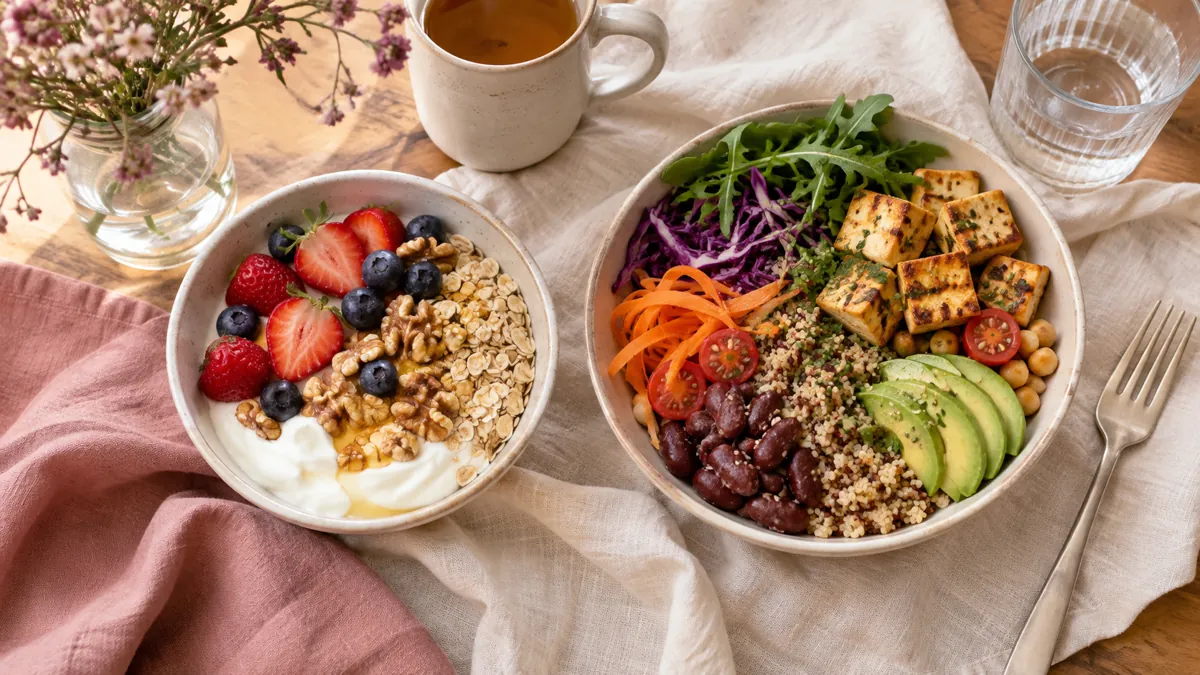
Protein is often presented as a magic fix for midlife weight gain. It is not. Yet it is a useful part of an everyday meal, especially when you want to maintain muscle while becoming more active or managing weight. The best approach is less dramatic than a shake at every meal: eat a variety of protein-rich foods, pair them with plants and whole grains, and choose amounts that fit your body and health.
This guide explains why protein matters, how to build meals without obsessing over grams, and what to do if your schedule or budget is tight. For the wider context of body changes, read our guide to weight gain after 35.
Why protein gets more attention in midlife
Muscle helps you move, carry things, recover from activity, and stay independent as you age. Resistance exercise is the main signal that tells your body to maintain or build it; adequate food supports that process. During midlife, changes in activity and the menopause transition can affect body composition. Research on weight management during this transition emphasizes preserving lean mass through a combination of nutrition and physical activity. That is why a protein-rich meal and a beginner strength session make a more useful pair than protein alone.
Protein also contributes to fullness, though the effect varies among people and meals. A breakfast of only coffee and a pastry may leave one person hungry soon afterward; adding yogurt or eggs could make it more satisfying. This is a practical observation, not proof that protein “switches off cravings.” Cravings have many causes, including inadequate food, sleep loss, stress, habit, and the simple appeal of a favorite food.
The goal is not to maximize protein at all costs. Vegetables, fruit, fiber-rich carbohydrates, and dietary fats still matter. If protein crowds out these foods, the overall diet may become less balanced. For someone with kidney disease or another medical condition, a high-protein diet may require individualized advice. Ask your clinician or a registered dietitian before adopting a target from social media.
How much is enough?
There is no single gram target suitable for every woman over 35. Needs differ with body size, activity, health status, and goals. Some midlife research discusses higher protein intake to help preserve lean mass, particularly alongside strength training, but a precise target should be personalized. You can start without calculating anything: include a meaningful protein source at most meals, then assess whether the meals satisfy you and support your activity.
If you want a more structured approach, speak with a registered dietitian who can account for your weight, medical history, and food preferences. Be cautious with blanket claims that every woman needs the same number of grams or must consume protein within a narrow window after waking. Most people can improve meal quality by distributing protein across the day without following a rigid clock.
A useful visual method is to put the protein food on the plate first, then add vegetables or fruit, a satisfying carbohydrate, and some fat. That could mean chicken, beans, tofu, fish, eggs, lentils, yogurt, cottage cheese, or a combination. A salad topped with a few seeds may be nutritious but might not be a satisfying lunch on its own. Add beans, tuna, chicken, tofu, or another substantial source if you need it to carry you through the afternoon.
Build a breakfast you will actually eat
Breakfast is often the easiest meal to improve because many common options contain little protein. You do not have to eat immediately after waking, and you do not have to force breakfast if it does not suit you. If mornings leave you hungry or you tend to skip food until a very large lunch, try a quick option for a week and see whether it helps.
Greek yogurt with berries, oats, and nuts is fast and adaptable. Eggs with toast and tomatoes take only a few minutes. A tofu scramble can be prepared ahead. Overnight oats become more filling when made with milk or yogurt, or with a suitable soy alternative. If mornings are chaotic, a sandwich with egg or cottage cheese can travel with you. Convenience is part of a sustainable plan.
Do not treat breakfast as a metabolism test. Eating protein in the morning can help some people feel full, but missing a specific “protein window” does not ruin the day. If your first meal is lunch, build a balanced lunch. If you need food before exercise, choose what sits comfortably. The best meal timing is the one that supports adequate nutrition and a routine you can repeat.
Make lunch and dinner easier
The simplest lunch often starts with leftovers. Cook an extra portion of beans, chicken, tofu, or fish at dinner and use it in a wrap or grain bowl the next day. Add a bag of salad, chopped vegetables, and a dressing you enjoy. This is more realistic than preparing seven elaborate lunch boxes every Sunday. If you buy lunch, look for a filling protein source and produce, then include a carbohydrate that helps the meal satisfy you.
Dinner can follow the same formula without becoming bland. Try salmon with potatoes and green beans; lentil pasta with vegetables and a side salad; turkey or tofu tacos with beans; or a chickpea curry over rice. Family meals work best when everyone can eat the same base, with portions or toppings adjusted for preferences. You do not need a separate “diet plate” while others enjoy dinner.
Frozen vegetables, canned beans, tinned fish, eggs, and plain yogurt are useful low-effort staples. They cut preparation time and can be budget friendly. Keep one or two meals so easy that you can make them when the day goes badly. Our seven-day meal planning guide shows how to turn a handful of staples into a flexible week.
Plant protein works too
You do not need meat at every meal. Beans, lentils, tofu, tempeh, soy milk, edamame, and many whole grains contribute protein. A variety of plant foods across the day can meet needs for many people. If you eat fully plant based, pay attention to nutrients such as vitamin B12 and seek individualized guidance where appropriate.
For a filling plant-based lunch, combine a substantial serving of lentils or tofu with vegetables and grains. A few chickpeas sprinkled over lettuce are a garnish; a chickpea and quinoa bowl is a meal. Texture and flavor matter. Roast tofu until crisp, add spices to beans, or use a sauce you like. Sustainability is easier when food tastes good.
Protein powders are optional. They can be convenient when food access or appetite makes meals difficult, but they are not required for a healthy eating pattern. Look at the full product label and consider whether you would rather spend the money on foods you enjoy. If a supplement promises hormone balance or rapid fat loss, that claim is a reason for skepticism.
Protein and weight management: keep expectations realistic
Protein may support fullness and muscle preservation, especially during weight loss, but it does not cause automatic fat loss. Total food intake, movement, sleep, medications, and health conditions still play roles. High-protein desserts and snacks can be enjoyable, but a label is not proof that the food is more useful for your goals. Ask whether it satisfies you and fits your day.
Likewise, low-protein meals are not “bad.” A bowl of fruit can be a snack, and a celebration meal does not need to meet a target. Think in patterns across days. If most meals offer enough food and variety, one meal does not make or break the plan. Rigid rules can make eating feel harder than it needs to be.
The strongest pairing for muscle is adequate nutrition and a progressive strength routine. A 20-minute session at home can help you begin, while walking or other aerobic activity supports broader health. Explore our strength training guide for a sample routine and ways to increase the challenge safely.
A practical one-week experiment
Choose one meal that often leaves you unsatisfied. Write down what you normally eat and when you next feel hungry. Then add or increase a protein-rich food without removing the rest of the meal. For breakfast, that might be yogurt beside oats. For lunch, it might be a full serving of beans in your salad. Notice your energy and hunger for a few days. If the change does not help, try a different meal or look at whether you simply need more food overall.
Next, choose two easy protein foods for your shopping list and one backup for rushed days. Prepare one batch component, such as boiled eggs, cooked lentils, or baked tofu, rather than an entire week of identical meals. Keep the plan flexible enough for dinner invitations, travel, or a tiring workday.
If sleep disruption is driving evening snacking, a meal tweak alone may not solve it. See our sleep and stress guide for ideas that address the broader routine. Food choices are one part of care, not a verdict on discipline.
Frequently asked questions
Do I need a protein shake?
No. Many people can meet their needs with food. A shake may be convenient, but it is neither required nor inherently better than a meal. Choose it for practicality if it suits you, and seek individual advice if you have a medical condition.
Is there a perfect amount per meal?
Needs vary. Rather than copying one universal target, include a meaningful protein source across meals and ask a dietitian for a specific number if you need one. A balanced pattern matters more than hitting an exact figure every time.
Will eating more protein remove belly fat?
No food targets belly fat. Protein can support fullness and muscle maintenance, while weight management depends on a larger, sustainable pattern. Be wary of promises that a single nutrient will change where your body stores fat.
Try a done-for-you structure
The M-Body Method includes a 28-day meal planner, recipes, grocery lists, and short home workouts. It provides a convenient structure for someone who wants fewer daily decisions; it does not prescribe a medical protein target or guarantee weight loss. Explore the M-Body Method and what is inside before deciding whether it fits your needs.